TL;DR:
- Regular cleaning of high-touch surfaces and entryways is essential for appearance and sanitation.
- San Francisco regulations require sidewalk washing outside stores displaying merchandise outdoors.
- Frequent floor care, especially during rainy seasons, prevents hazards and maintains store appeal.
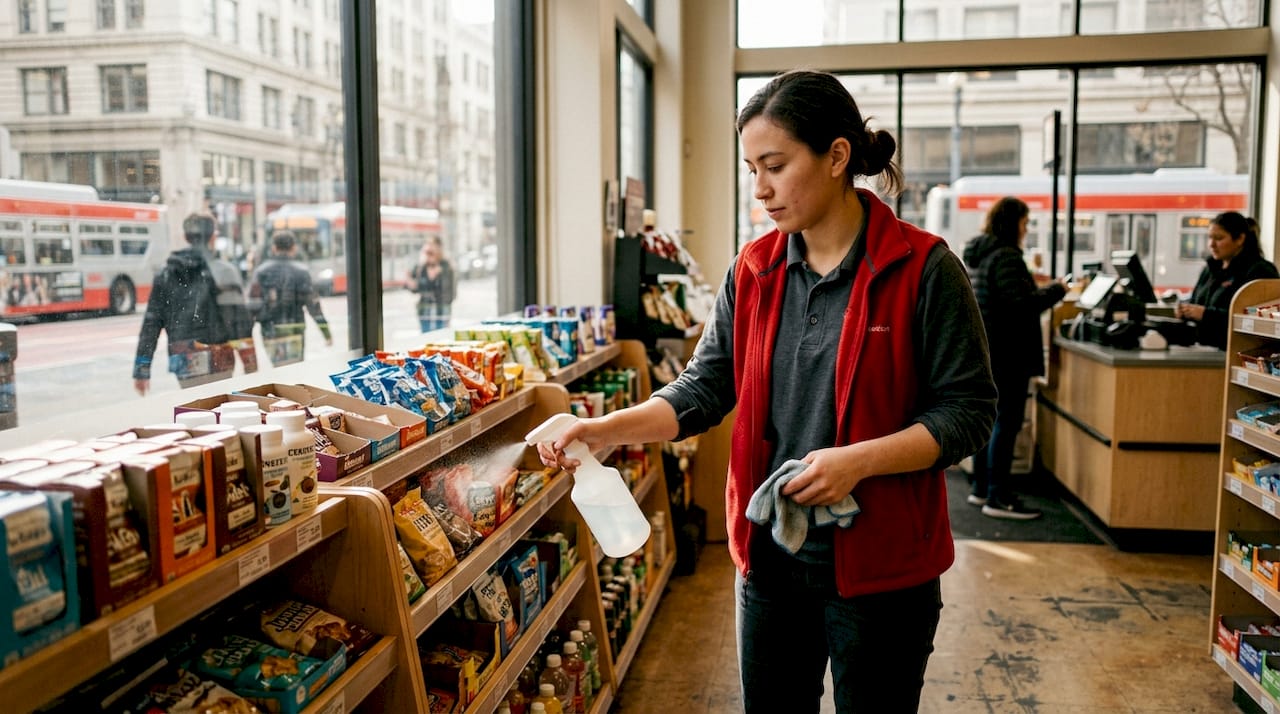
Retail stores in the San Francisco Bay Area face a unique challenge: foot traffic is high, weather shifts fast, and shoppers have options. A dirty store does not just look bad, it costs you sales. Shoppers spend more time and money in clean environments, and they leave quickly when they notice grime. The good news is that a structured cleaning routine, tailored to the Bay Area’s specific conditions, can protect your revenue, keep your staff safe, and help you stay compliant with local rules. This article gives you practical, region-specific strategies to make it happen.
Table of Contents
- Key criteria for effective retail cleaning
- Daily and weekly cleaning routines for retail stores
- Spotlight: Floor care in busy retail environments
- Compliance and local regulations for retail cleaning in San Francisco
- Our take: What most retail cleaning advice overlooks in the Bay Area
- Get expert support for your retail cleaning needs
- Frequently asked questions
Key Takeaways
| Point | Details |
|---|---|
| Cleanliness drives revenue | Clean stores attract customers who shop longer and spend more. |
| Prioritize high-traffic zones | Focus daily effort on floors, entryways, and customer touchpoints for the biggest impact. |
| Follow SF compliance rules | San Francisco retailers must wash sidewalks daily if displaying merchandise and meet general health codes. |
| Routine makes a difference | Regular daily and weekly cleaning tasks help maintain a safe, attractive retail environment. |
Key criteria for effective retail cleaning
Cleaning a retail store is not the same as cleaning an office. Customers touch your products, your counters, and your doors dozens of times per hour. That contact creates both a hygiene risk and a first impression. When those two things collide, your brand is on the line.
Effective retail cleaning starts with understanding what you are actually trying to accomplish. There are two goals that must work together: appearance and sanitation. A floor that looks shiny but harbors bacteria is a problem. A spotless restroom that smells clean builds trust. The goal is both, not one or the other.
Here are the core areas every retail cleaning plan must cover:
- Entryways and doors: These are the first and last things customers see and touch.
- Checkout counters and POS terminals: High-touch surfaces that need disinfecting, not just wiping.
- Restrooms: Non-negotiable for customer retention and compliance.
- Fitting rooms: Often overlooked, but customers form strong opinions here.
- Floors and mats: Visible, high-traffic, and a safety issue if neglected.
- Stockrooms: Cleanliness here prevents pest issues and protects inventory.
Frequency matters as much as method. A counter wiped once a day in a busy Mission District boutique is not the same as one wiped every two hours during a weekend rush in Union Square.
“Poor hygiene drives customers away and reduces the time they spend in your store, directly affecting your bottom line.”
Bay Area retailers also need to think about local regulations. San Francisco has specific rules about sidewalk cleanliness, especially if you display merchandise outside your store. Staying compliant protects you from fines and keeps the neighborhood looking good, which benefits everyone on the block. Investing in retail cleaning services that understand these local requirements makes a measurable difference in how consistently standards are met.
Daily and weekly cleaning routines for retail stores
Knowing what to clean is only half the job. Knowing when to clean it is what separates stores that look consistently great from those that only shine after a deep clean every few months.
Daily cleaning tasks
- Wipe and disinfect all high-touch surfaces: door handles, counters, card readers, and light switches.
- Sweep and mop entryways and main floor areas.
- Clean and restock restrooms, including mirrors, sinks, and floors.
- Empty all trash cans and replace liners.
- Spot-clean glass doors and display cases.
- Inspect and clean fitting rooms after peak hours.
Weekly cleaning tasks
- Deep clean floors with appropriate equipment for your flooring type.
- Clean interior windows and glass partitions.
- Organize and wipe down stockroom shelving.
- Disinfect baseboards and lower wall surfaces.
- Launder or replace entry mats.
Here is a simple comparison to help you plan your schedule:
| Task | Weekday frequency | Weekend frequency |
|---|---|---|
| High-touch surface disinfection | 2x per day | 3x per day |
| Floor sweeping and mopping | 1x per day | 2x per day |
| Restroom cleaning | 2x per day | 3x per day |
| Trash removal | 1x per day | 2x per day |
| Glass and window cleaning | Weekly | Weekly |
| Deep floor care | Weekly | Weekly |
If your store displays merchandise on the sidewalk, San Francisco requires that you wash sidewalks daily and comply with general health sanitation codes. This is not optional, and inspectors do check.
Pro Tip: Use a professional cleaning checklist adapted for retail to track task completion by shift. This creates accountability and makes it easy to identify gaps before they become complaints. If you are unsure how often certain tasks need professional attention, cleaning frequency guidance can help you build a realistic schedule.
Spotlight: Floor care in busy retail environments
Floors take the most abuse in any retail store. Every customer who walks in brings in dirt, moisture, and debris. In the Bay Area, where fog and rain are common from October through April, wet shoes and umbrellas create a daily slip hazard that you cannot ignore.
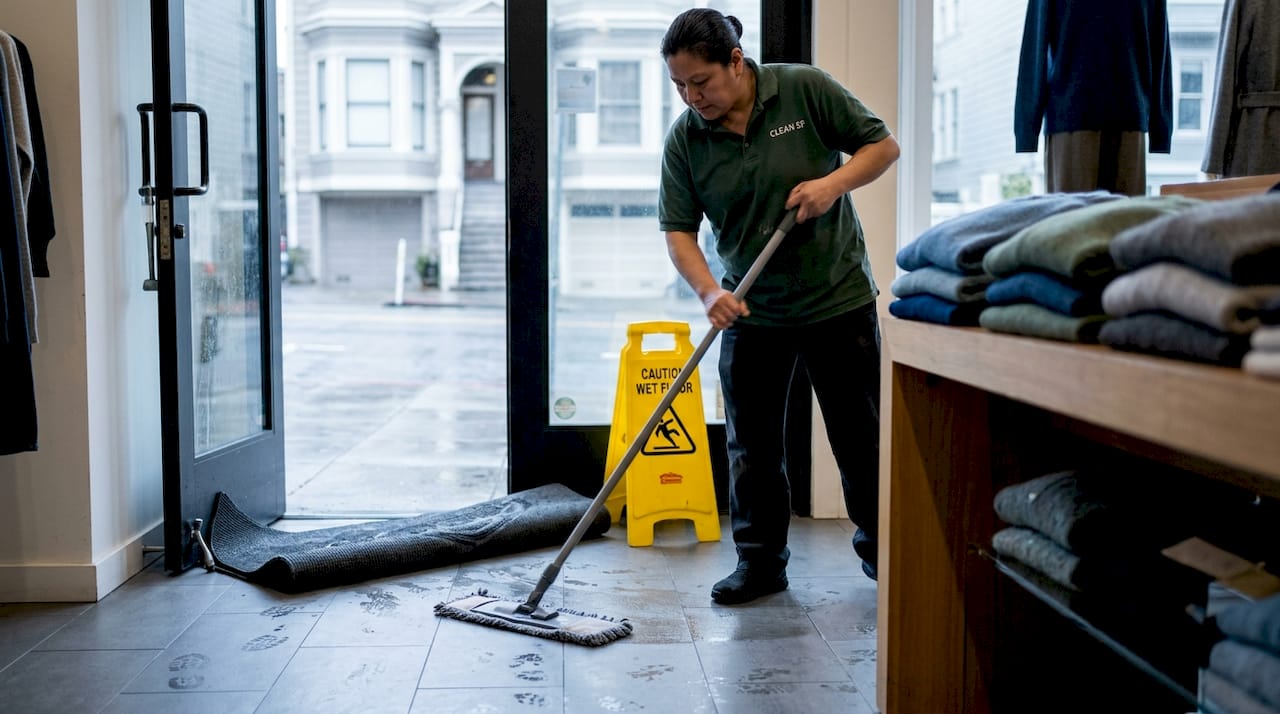
Clean floors reduce slip and fall risks and prevent merchandise damage from tracked-in debris. That is a safety issue, a liability issue, and a visual one all at once.
Here is how the main floor care methods compare:
| Method | Best for | Frequency | Limitations |
|---|---|---|---|
| Sweeping | Hardwood, tile, concrete | Daily | Misses fine dust and bacteria |
| Vacuuming | Carpet, rugs, mats | Daily | Slow for large open areas |
| Damp mopping | Tile, vinyl, sealed hardwood | Daily or 2x daily | Can leave streaks if done wrong |
| Professional polishing | Hardwood, tile, VCT | Monthly or quarterly | Requires equipment and expertise |
| Deep scrubbing | All hard surfaces | Weekly or monthly | Time-intensive, best after hours |
For most Bay Area retail stores, the winning combination is daily sweeping and damp mopping, with a professional deep clean scheduled weekly or biweekly depending on foot traffic volume.
To extend the life of your flooring and reduce daily cleaning time, focus on prevention:
- Place high-quality entry mats at every door, inside and outside.
- Use walk-off mats that are long enough to capture moisture from at least four steps.
- Set up a mat rotation system so one mat is always clean and dry.
- Apply floor finish or sealant appropriate for your flooring type to resist staining.
Pro Tip: During rainy months, rotate your entry mats twice a day instead of once. A saturated mat stops absorbing moisture and becomes a slip hazard itself. Partnering with a provider that offers commercial floor care means you never have to worry about whether your floors meet safety or appearance standards.
Compliance and local regulations for retail cleaning in San Francisco
San Francisco is one of the most regulated business environments in the country. That is not a complaint, it is just reality. Knowing what the rules are keeps you out of trouble and builds a reputation as a responsible business in your community.
The most specific local rule for retailers is straightforward: daily sidewalk washing is required if you display merchandise outside your store. Beyond that, San Francisco follows general health codes that apply to all commercial businesses.
Here is what compliance looks like in practice:
- Sidewalk sanitation: If merchandise is displayed outside, wash the sidewalk daily. Use water only or approved cleaning solutions that do not harm storm drains.
- Chemical safety: All cleaning products used by staff must be stored safely and used with appropriate personal protective equipment (PPE). This includes gloves, eye protection, and proper ventilation.
- Waste disposal: Cleaning waste and single-use supplies must be disposed of correctly. Do not pour chemical solutions into storm drains.
- Staff training: Anyone cleaning your store should know basic sanitation procedures and how to handle cleaning chemicals safely.
- Documentation: Keep records of cleaning schedules and product usage. If you receive a complaint or face an inspection, this documentation protects you.
If an inspector visits or a complaint is filed, stay calm and show your records. A well-documented cleaning program is your best defense. Professional janitorial compliance support can help you build that documentation from day one. Understanding what is included in janitorial services also helps you ask the right questions when hiring outside help.
One important note: eco-friendly cleaning products are not just a trend in the Bay Area, they are increasingly expected by customers and sometimes required near sensitive environmental areas. Choosing certified green products protects your brand and the local environment.
Our take: What most retail cleaning advice overlooks in the Bay Area
Most cleaning guides treat retail stores as if they all exist in the same environment. They do not. A store in the Sunset District deals with salt air and persistent fog moisture that a store in downtown San Jose never sees. A boutique on Valencia Street has a completely different foot traffic pattern than a shop near Fisherman’s Wharf.
Standard checklists miss this entirely. They tell you to clean your floors daily without asking what kind of floors you have, what the local weather is doing, or when your actual peak traffic hours fall. That is why so many retailers follow the advice and still end up with dirty entryways by noon.
From years of working with Bay Area retailers, we have seen one consistent mistake: underinvesting in entryways and visible surfaces. These are the areas customers judge instantly. A clean back stockroom means nothing to a shopper who walked in through a grimy door. Prioritize what is visible, then work inward.
Tailoring your routine to your microclimate and your specific foot traffic pattern is not extra work. It is smarter work. Expert retail cleaning support that knows the Bay Area’s conditions can help you build a plan that actually fits your store.
Get expert support for your retail cleaning needs
Maintaining a clean, compliant retail store in the Bay Area takes more than good intentions. It takes a consistent system, the right products, and people who know what local standards require.
BuffAway has spent over 10 years serving more than 200 businesses across the San Francisco Bay Area, including retail stores that need reliable, flexible cleaning support. Whether you need daily janitorial coverage, floor care, or help staying compliant with SF regulations, we build plans around your schedule and your store. Explore our full cleaning services or get started with retail cleaning solutions designed specifically for Bay Area businesses. Request a quote today and see what a cleaner store can do for your sales.
Frequently asked questions
What are the most important retail areas to clean daily?
High-touch points like doors, counters, restrooms, fitting rooms, and entryways should be cleaned every day. Customers linger longer in clean environments, and consistent daily attention to these areas also reduces slip and fall risks.
Are there any specific SF regulations for retail cleaning?
Stores displaying merchandise outdoors must wash sidewalks daily and all businesses must follow general health sanitation codes covering chemical use, waste disposal, and staff safety practices.
How often should retail floors be deep cleaned?
High-traffic retail floors should be deep cleaned at least weekly. Busy San Francisco locations may need deep cleaning more often, especially during the rainy season when cleanliness directly affects both safety and sales.
Can professional cleaning help with compliance?
Yes. Professional cleaning companies familiar with San Francisco know the sidewalk cleaning requirements and local health codes, and they can help stores maintain documentation and procedures that hold up during inspections.